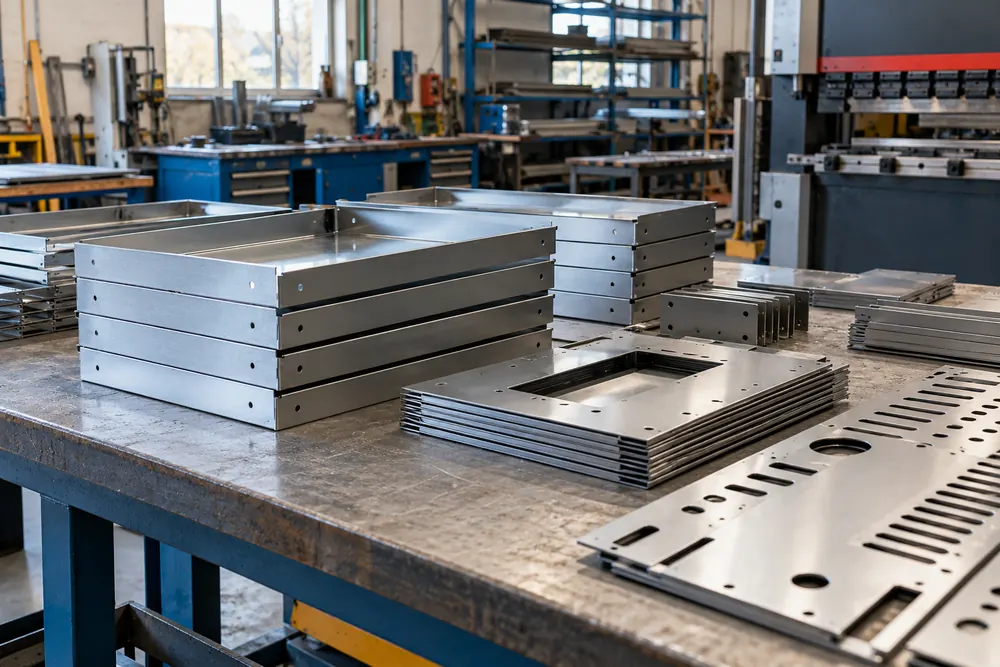
The Detail Is In The Fold
Sheet metal fabrication turns flat material into parts through cutting, forming and joining. Typical commercial enquiries include equipment covers, folded trays, enclosure panels, flashing details and brackets. The best starting point is a drawing that shows the finished part, its purpose and how it connects to the surrounding assembly.
Thickness alone does not define performance. The metal grade, bend geometry, span between supports and method of attachment all influence how a panel behaves. We help clarify these requirements so the enquiry describes a usable component rather than an outline shape with unanswered questions.
Choose Material For The Environment
Mild steel can suit painted internal components, while stainless steel may be appropriate where corrosion resistance or cleaning matters. Aluminium can reduce component weight, but its stiffness and joining behaviour differ from steel. The choice should follow the exposure, loading and maintenance requirements of the application.
Specify the grade and surface finish rather than simply asking for stainless. In food or washdown settings, joint design and cleanability matter as much as the visible surface. Do not assume that a polished appearance makes an assembly suitable for food contact or for a chemically aggressive environment.
Drawings, Bends And Tolerances
A flat pattern must allow for the way the material stretches during bending. Inside bend radii, reliefs, hole positions near folds and return flanges can affect whether a part can be formed accurately. Dimension the finished component clearly and identify the reference faces that matter during assembly.
Avoid applying a tight tolerance to every dimension without a reason. Fit-critical hole centres and mating surfaces may need closer control than an external cover edge. For repeat parts, agree a first-off sample or inspection stage before releasing the full batch, especially where the component must fit existing equipment.
Safety And Applicable Requirements
Machine guards must be considered as part of the equipment’s safety arrangements. The Provision and Use of Work Equipment Regulations 1998 place duties on those providing and using work equipment, including guarding dangerous parts. A fabricated cover should not be assumed to meet those duties without a risk assessment and a suitable guard design.
Structural sheet components can fall within a different specification from simple covers. Confirm whether BS EN 1090 requirements apply to the intended structural use, rather than applying product marking rules to all sheet metal indiscriminately. Welding and finishing also need appropriate workplace controls. Read HSE’s PUWER overview for equipment-user duties.
How Your Parts Move Through Production
Start with the drawing, quantity, material specification and any mating-part dimensions. Confirm whether you need cutting only, folding, welding, threaded inserts or a finished assembly. Assembly access should be checked before folds make a fastening point difficult to reach.
Cutting and forming follow the agreed manufacturing details. Welded assemblies may need controlled sequencing to limit distortion, with deburring and edge treatment suitable for the intended handling and use. Protective film, cosmetic faces and grain direction should be identified before processing.
Inspection checks the agreed dimensions and finish before packing. Delivery packaging should protect corners and visible surfaces, and part references help the receiving team identify similar components. Where a part will be fitted into an existing machine, arrange fit verification before committing to an extensive production batch.
What A Sheet Metal Quote Depends On
Material grade, thickness, nesting efficiency and batch size affect cost. So do the number of bends, tool access, weld length, inserted hardware, deburring and cosmetic finish. A small complex enclosure can require more workshop time than a larger flat panel with straightforward holes.
Send a dimensioned PDF and, if available, the relevant CAD files with revision references. Tell us whether powder coating, painting or another finish is required and which faces will be visible. For heavier welded supports, see our metal fabrication service instead of forcing a sheet solution onto the wrong application.
Sheet Metal Fabrication FAQs
Can You Work From An Existing Sheet Metal Part?
An existing sheet metal part can help establish shape and fixing positions, but wear, distortion and missing details must be considered. Provide photographs and explain what needs to change. A measured drawing or trial component may be needed before repeat manufacture, particularly where close-fitting covers or moving equipment are involved.
What Files Help With Sheet Metal Fabrication?
Sheet metal fabrication enquiries benefit from a dimensioned PDF showing material, thickness, bends and finish, alongside CAD files where available. Mark the current revision and the quantity required. Identify critical dimensions and cosmetic faces so the manufacturing route can be assessed without guessing which details matter to your assembly.